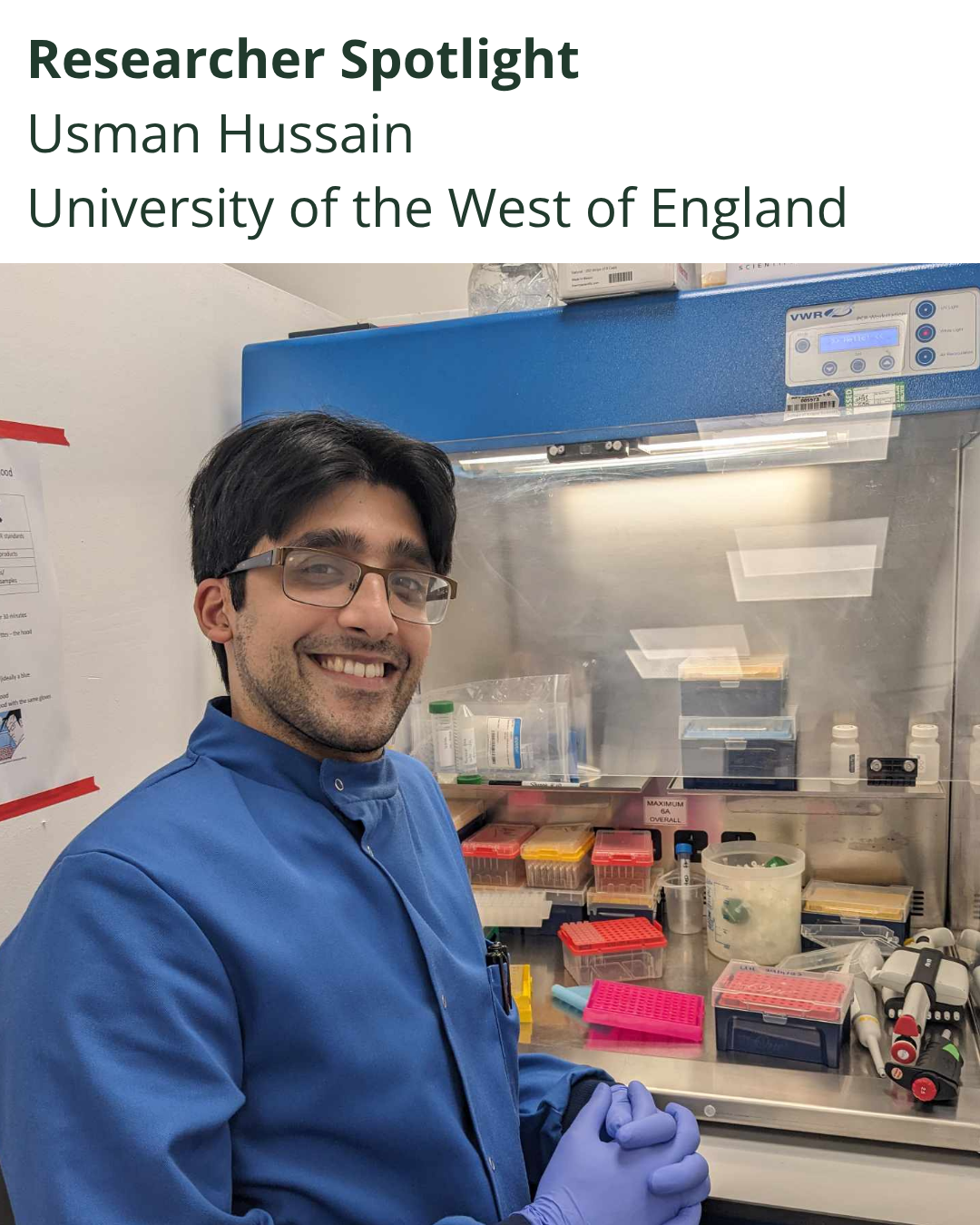
Researcher Spotlight - Dr Usman Hussain
Dr Usman Hussain is a researcher at the University of the West of England, with a background in microbiology and molecular biology, with an interest in plant pathogens and plant-microbe interactions. He works alongside Dr Carrie Brady on the BAC-CHAT project, a four-year BBSRC-funded research programme focused on Acute Oak Decline (AOD).
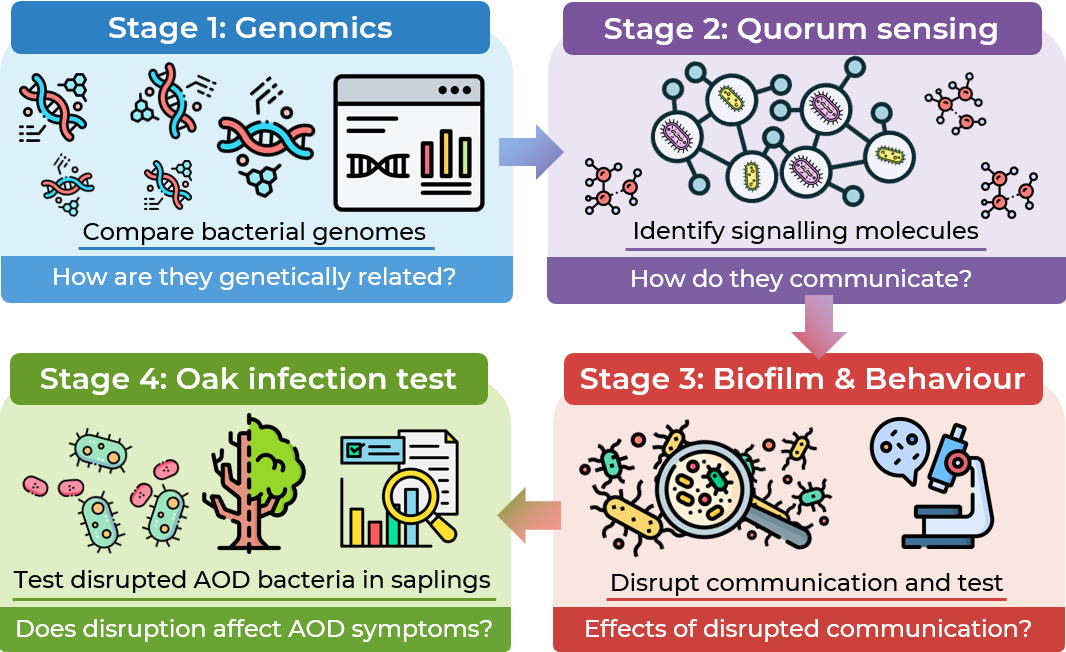
BAC-CHAT Overview
AOD is a complex tree-decline disease that threatens mature native oak trees across Great Britain, causing characteristic stem bleeds and necrotic lesions beneath the bark. Three bacterial species - Brenneria goodwinii, Gibbsiella quercinecans, and Rahnella victoriana – contribute to symptom development but are also thought to be natural residents of healthy oaks. The precise mechanisms by which these bacteria shift from harmless residents to pathogens remain poorly understood, but quorum sensing could be the key to this transition. Quorum sensing is a remarkable cell-to-cell communication system that bacteria use to “talk” to one another and coordinate behaviour.
Usman’s day-to-day work includes conducting lab experiments, such as genetically modifying AOD bacteria to make them glow in various colours, enabling better visualisation under the microscope. This hands-on laboratory work is complemented by data analysis and genomics. BAC-CHAT aims to better understand the role of bacterial communication in Acute Oak Decline.
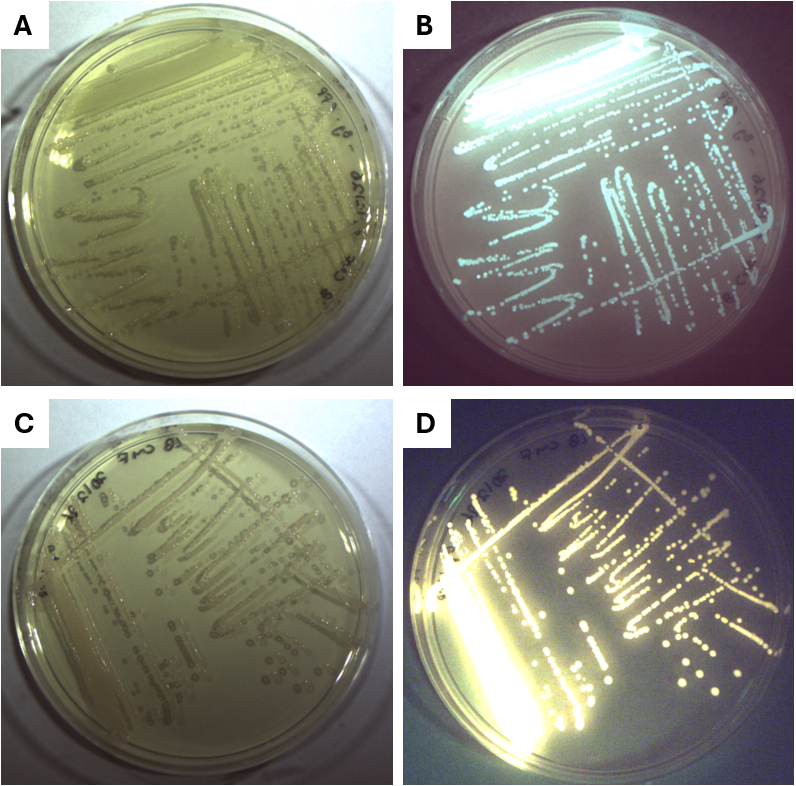
Fluorescing bacteria images
Legend for fluorescing bacteria image: A – Brenneria goodwinii with Green fluorescent protein (GFP) under natural light; B – Brenneria goodwinii with GFP under blue light; C –Gibbsiella quercinecans with Red Fluorescent Protein (RFP) under natural light; D – Gibbsiella quercinecans with RFP under blue light.
You can read more about Usman’s work in our 2024 - 25 Annual Report.