
Memory in the forest: How trees remember stress and why it matters for the future of oak woodlands with Dr Estrella Luna Diez
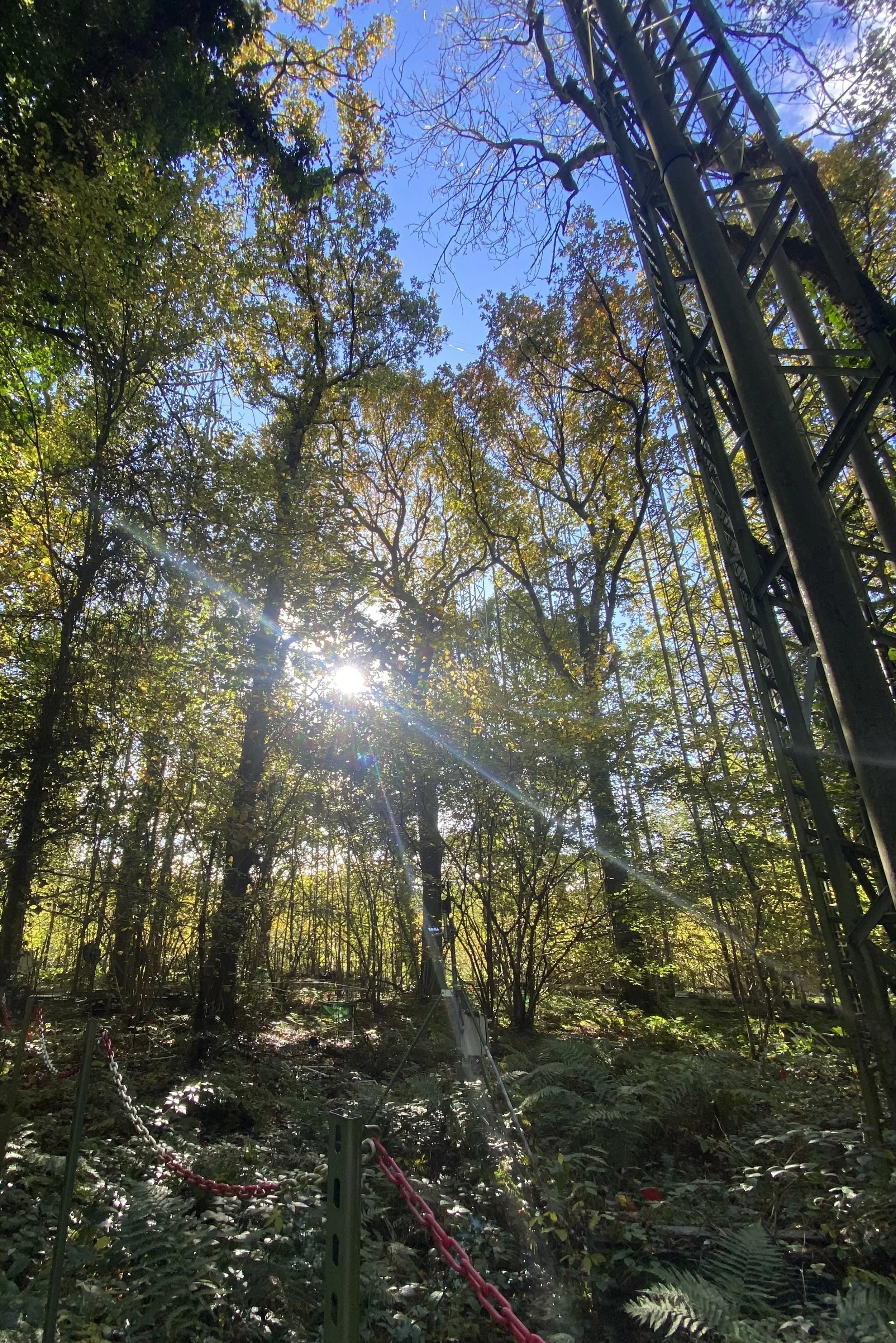
Trees can live for hundreds of years. Some oaks standing in the British countryside today were already growing before the Industrial Revolution.
During their lives, they survive droughts, storms, pests, diseases and increasingly, the pressures of climate change.
But how do trees cope with all of this over such long timescales?
This is one of the central questions behind the Understanding Memory of UK Treescapes for Better Resilience and Adaptation (MEMBRA project), a research programme that explored how trees “remember” environmental stress and how this memory may influence their future resilience.
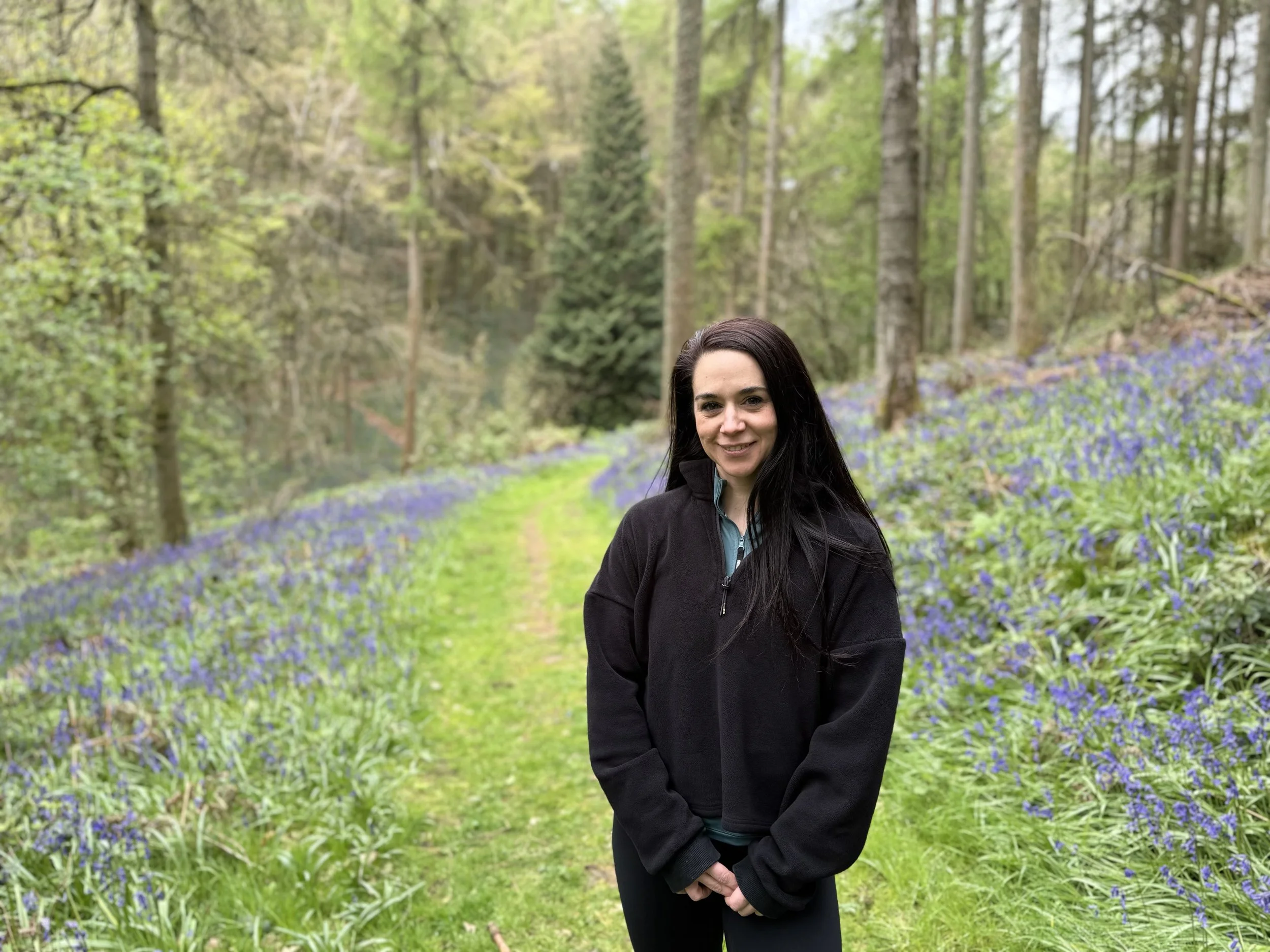
My name is Estrella Luna-Diez, an Associate Professor in Plant Pathology at the University of Birmingham, and Principal Investigator of MEMBRA.
In this role, my team and I study how climate change and disease alter the biology of forest trees at a very deep level, not by changing the DNA sequence itself, but by changing how that DNA is regulated. This field is known as epigenetics.
Trees remember more than we thought
For many years, scientists assumed that adaptation in forests mainly depended on slow genetic evolution across many generations. But trees live so long that this process may not always be fast enough to keep pace with rapid climate change. Epigenetics offers another possibility. In plants, chemical marks can be added onto DNA or associated proteins, changing how genes behave without altering the genetic code itself. One of the most important of these marks is DNA methylation. This involves adding small chemical groups, called methyl groups, onto DNA. These changes can influence if genes are switched on or off and can sometimes persist for long periods.
Importantly, these epigenetic changes are influenced directly by the environment. Drought, rising atmospheric CO₂, pathogens and temperature changes can all reshape the epigenetic landscape of a tree. In some cases, these changes may help plants respond faster or more effectively to future stress. Our work in MEMBRA has shown that this process is happening in forest trees (Sanchez-Lucas et al., 2026a) growing in real-world environments.
What we discovered in Ash and Oak
One major focus of MEMBRA has been understanding how trees respond to disease and climate stress. In ash trees, we have discovered that ash dieback can alter DNA methylation patterns, particularly in young trees, while mature individuals show much weaker responses (unpublished results). Similarly, oak seedlings responded to defence priming treatments (Sanchez-Lucas, Bosanquet et al., 2025), sometimes described as a form of “plant vaccination”, whereas in mature trees priming has never been proven.
Climate conditions also influenced these responses. In oak, elevated CO₂ affected how oak seedlings responded to disease (Sanchez-Lucas et al., 2023), while mature trees appeared much more stable (Sanchez-Lucas, Raw, Datta et al., 2026 BioRxiv). Together, these findings suggest that age plays a major role in how trees regulate immunity and respond to environmental change.
Importantly, this work connects with a growing concern across UK forests: the failure of natural regeneration. A recent MEMBRA study revealed widespread declines in the recruitment and survival of young trees across semi-natural mature forests in Great Britain (Cintra et al., 2026). These findings raise important concerns about the future resilience of British woodlands and highlight the need to better understand how young trees cope with environmental stress under climate change.
Can trees pass stress memories to their offspring?
Perhaps the most exciting finding from MEMBRA is that some environmentally induced changes appear to carry over into the next generation
Publications are in preparation, but I can give you a little glimpse of our findings. In mature oaks exposed to elevated atmospheric CO₂, we found that these environmental conditions leave detectable molecular signatures in DNA methylation patterns. More importantly, offspring from exposed trees show altered traits linked to adaptation. Similarly, drought-exposed parent trees can produce seedlings with enhanced drought tolerance during establishment. However, this effect does not appear universal. When we examined stresses linked to diseases such as ash dieback or acute oak decline, we found little evidence that these stress memories are transmitted across generations. This tells us that some environmental signals may produce stable inherited responses, while others do not. Understanding why could become critically important for future forestry.
Looking to the future
These discoveries are opening new ways of thinking about forest resilience under climate change. We are now exploring how environmental history shapes the biological flexibility of trees throughout their lives, and if young trees can be conditioned to respond more effectively to stresses such as drought and disease through approaches similar to “tree immunisation”.
As part of my new role as one of the Directors of Birmingham Institute of Forest Research (BIFoR), the institute is increasingly focusing on understanding the molecular and epigenetic processes that shape how trees respond to environmental change. Importantly, the BIFoR Free Air CO2 Enrichment (FACE) facility, where mature oaks are exposed to the atmospheric CO₂ levels projected for 2050, provides one of the most powerful forest climate experiments in the world. By studying mature trees under carefully controlled future climate conditions, we can reduce much of the environmental and genetic variation that normally hides these subtle biological responses.
As climate change accelerates, forests will face environmental conditions unlike anything experienced in modern human history. If we are to conserve iconic species such as oak, we need to understand not only their genetics, but also the hidden biological memory systems that shape how trees respond to the world around them. The forest, it turns out, may remember far more than we ever imagined.

References
Rosa Sanchez-Lucas(a), Joe He, Marcella Chirico, Jack Bosanquet, Annabella Lehner, Kehinde S. Oyesola, Kris Hart, Rob A. MacKenzie, Estrella Luna, Marco Catoni. Epigenomic Landscape of Oak (Quercus robur) across Seasons and Generations.
bioRxiv 2025.11.14.688509; doi: https://doi.org/10.1101/2025.11.14.688509
Sanchez-Lucas, R., Bosanquet, J.L., Henderson, J., Catoni, M., Pastor, V. and Luna, E. (2025), Elicitor Specific Mechanisms of Defence Priming in Oak Seedlings Against Powdery Mildew. Plant, Cell & Environment, 48: 4455-4474. https://doi.org/10.1111/pce.15419
Sanchez-Lucas R, Mayoral C, Raw M, Mousouraki MA, Luna E. Elevated CO2 alters photosynthesis, growth and susceptibility to powdery mildew of oak seedlings. Biochem J. 2023 Sep 13;480(17):1429-1443. doi: 10.1042/BCJ20230002. PMID: 37497606; PMCID: PMC10586781
Rosa Sanchez-Lucas(b), Mark Raw, Alisha Datta, Katie Hawkins, Deanne Brettle, Emma Platt, Sami Ullah, Kris Hart, Carolina Mayoral, Moritz Stegner, Ilse Kranner, Scott Hayward, Victoria Pastor, A. Rob MacKenzie, Estrella Luna (2026) Multi-year study on the effects of elevated CO2 in mature oaks unravels subtle metabolic adjustments but stable biotic stress resistance. bioRxiv 2025.05.03.652050; doi: https://doi.org/10.1101/2025.05.03.652050
Bruno B.L. Cintra, Rodrigo S. Bergamin, Rachel Mailes, Roel Brienen, Estrella Luna, Angus Rob MacKenzie, Adriane Esquivel-Muelbert (2026). Decline in regeneration capacity in mature forests across Great Britain, Forest Ecology and Management, Volume 603, 123468, ISSN 0378-1127, https://doi.org/10.1016/j.foreco.2025.123468.
