
Protect our oaks: help gather data by joining the grey squirrel damage survey
Can you help the UK Squirrel Accord (UKSA) by collecting and submitting data on the negative impacts of grey squirrel bark stripping damage?
Grey squirrels, Sciurus carolinensis, are one of the UK’s worst invasive species. While awareness of red and grey squirrel conflicts is well known, there is far less understanding of the issue of greys damaging and killing trees like oaks, Quercus spp., through bark stripping – costing England and Wales at least £37 million each year. UKSA asks individuals to survey woods during 2026 for grey squirrel damage and report their findings to contribute to a better evidence base that helps raise awareness and encourages action.
Oak is one of the UK’s most ecologically and economically important trees, and one of the worst impacted by grey squirrels. Oaks support over 2,300 species, more than any other species of tree in the country.
“One woodland owner reported losing 90% of the oaks trees they planted because of bark stripping.”

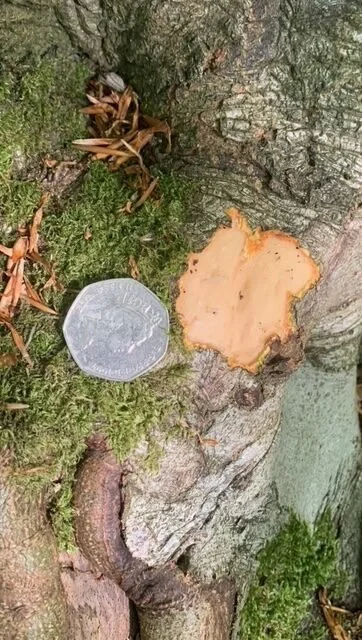

In many areas, we are losing our most biodiverse tree in the landscape through physical lose and a reluctance to plant a tree that will be so badly impacted. This makes it both a forestry and conservation issue that strengthens the need for effective grey squirrel management.
Mast years and mild winters are recognised as factors boosting grey squirrel numbers. The mast year in 2022 was followed by two mild winters and resulted in anecdotal reports of significantly high levels of damage and numbers of grey squirrels in 2024. One individual found them not only bark stripping broadleaved trees but also damaging large areas of Norway spruce.
Grey squirrel is an established and widespread invasive non-native species. Siting it in the category of the most difficult to manage or eradicate from areas. However, if we want healthy mature woods and our oaks to survive for the future then grey squirrel management is essential. Grey squirrel management is most effective when conducted at a landscape scale in partnership with other landowners.
Value of surveying
Surveying for grey squirrel bark stripping is a valuable way to understand levels of damage to trees and wooded areas. Providing useful information that feeds into management plans to protect young trees and vulnerable woodlands. Making it a useful activity for landowners and managers to monitor damage and change over time.
UKSA plans to create a rolling programme of data gathering over the next few years. Enabling it to build a comprehensive dataset that creates a picture of current damage and enables monitoring of change over time. Contributing to the important need to keep telling the story of negative grey squirrel impacts to our valuable trees and woodland ecosystems.
“In 2025 there was another mast year followed by a mild but wet winter. Will that result in a significant increase in grey damage over the next couple of years? Collating data through the UKSA survey will help provide evidence and understand change.”
Who can survey?
Anyone with landowner permission can carry out the user-friendly Grey Squirrel Activity and Impact Assessment, designed by The National Forest (TNF), in woods across the UK. Then submit the results into a simple online UKSA survey. The aim is to better understand the scale of bark stripping problems across the UK to help guide future action and raise awareness.
The call is now open for 2026 data submissions, until the end of January 2027
Tree damage survey 2026 - UK Squirrel Accord
In England, you may carry out the TNF assessment as part of requirements to access the Forestry Commission’s CWS3 grant that funds grey squirrel management activities. If so, please also submit your results to the UKSA survey help gather this important data.
You can get involved this year by carrying out, or allowing an assessment of your woods and feeding the results into the UKSA’s online survey.
Links to the TNF assessment methodology and recording sheet, and UKSA survey are available online:
Contact UKSA with any questions or requests for survey training: info@squirrelaccord.uk
Forest Research has a useful technical note online: Controlling grey squirrels in forests and woodlands in the UK - Forest Research, published in December 2019. This sets out detailed guidance for managing grey squirrels, including strategies and methods.
Author
Kay Haw is the Director of the UK Squirrel Accord. A partnership of 49 conservation and forestry organisations working together to help protect the UK’s red squirrels, trees and woodland ecosystems, and reduce negative grey squirrel impacts.